
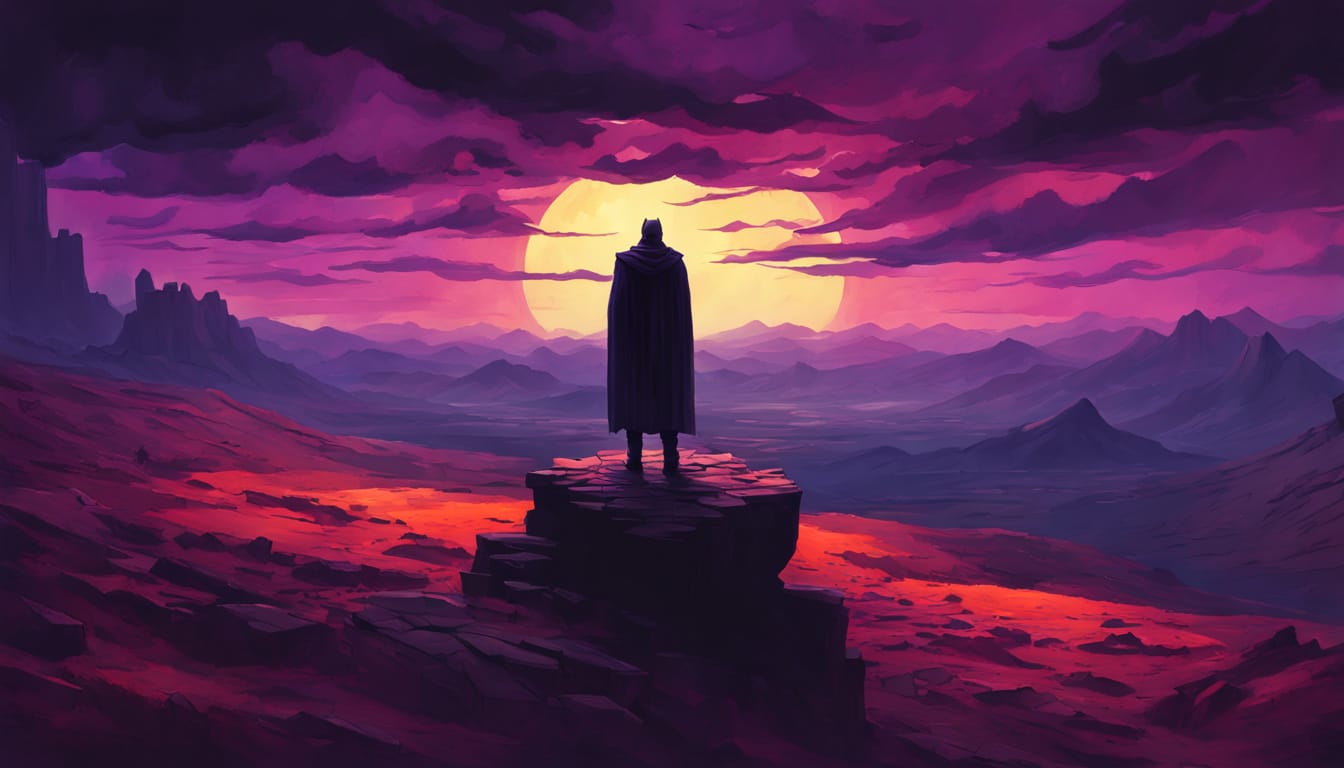


How Domination Protects the Self, Distorts the Field, and Evolves Into Creative Agency
The Moment You Realize You’re the Villain
There’s a particular kind of silence that follows the moment you see yourself through someone else’s eyes — not the eyes that adore you, or rely on you, or fear disappointing you, but the eyes that flinch.
You weren’t trying to hurt them. You were trying to stop the hurt — the rising panic, the loss of control, the sense that everything is slipping. But the words came out sharp. The posture tightened. The room bent around your intensity.
And suddenly, you’re not the protector, the competent one, the one holding everything together. You’re the Villain.
Not because you’re cruel. But because your nervous system chose domination as its fastest route back to safety.
Villainhood isn’t a moral identity. It’s a physiological strategy.
And like all strategies, it makes perfect sense once you understand what it’s protecting.
The Physiology of the Villain: Power as a Shield
When the body senses threat — not danger, but threat to identity, belonging, coherence, or control — it mobilizes.
For some, that mobilization collapses inward (Victim). For others, it disappears (Bystander). For others still, it overfunctions (Hero).
But for the Villain, mobilization becomes amplification.
- Voice sharpens
- Muscles tighten
- Vision narrows
- Precision increases
- Boundaries harden
- Certainty spikes
This is not aggression for aggression’s sake. It is self‑protection through intensity.
The Villain role emerges when the body believes:
“If I don’t take control, I will be controlled.”
Domination is the nervous system’s attempt to prevent annihilation — emotional, relational, or existential.
The Internal Experience of the Villain
From the outside, the Villain looks powerful. From the inside, the Villain feels:
- cornered
- misunderstood
- responsible for everything
- terrified of losing control
- ashamed of their intensity
- resentful of others’ fragility
- exhausted by being “the strong one”
Villains rarely feel like villains. They feel like the only adult in the room.
And that belief — “If I don’t take charge, everything will fall apart” — is the core wound of the Villain role.
How the Villain Distorts the Relational Field
Domination creates a predictable pattern in the interpersonal field:
- Others shrink
- Others appease
- Others avoid
- Others retaliate
- Others collapse
- Others lose access to their own agency
The Villain doesn’t intend this. But intensity reorganizes the room.
When the Villain enters the field dysregulated, the field responds by:
- constricting
- polarizing
- orienting around the Villain’s emotional state
This is why Villains often feel lonely. Power without attunement creates distance.
Identity-Protective Mechanisms of the Villain
To maintain coherence, the Villain role relies on several internal mechanisms:
- Justification (“I had to.”)
- Moral certainty (“I’m right.”)
- Competence superiority (“No one else can handle this.”)
- Emotional minimization (“It wasn’t that bad.”)
- Selective empathy (attuned to threat, not impact)
- Narrative control (shaping the story to preserve identity)
These mechanisms aren’t manipulative. They’re protective.
They keep the Villain from collapsing into the shame that sits directly underneath the intensity.
How the Villain Pulls Scarcity Roles Into the Field
When a person drops into Villain physiology, the surrounding system reorganizes itself around their intensity, pulling others into scarcity roles that stabilize the field — even if no one consciously chooses those positions.
Victim (flight)
The Victim’s collapse activates the Villain’s urgency.
The Victim says, “I can’t.” The Villain hears, “You must.”
The Victim’s helplessness pulls the Villain into:
- rapid mobilization
- emotional triage
- boundary enforcement
- over-responsibility
- frustration disguised as competence
To the Villain, the Victim’s collapse is not an inconvenience — it is a destabilizing force. The nervous system interprets it as a sign that the structure is failing, and the Villain’s job is to restore order before everything unravels.
The Villain does not see the Victim as weak. They see them as a threat to stability.
What the Villain confirms to the Victim:
- “You are fragile.”
- “You need someone stronger.”
- “Your feelings are too much.”
- “You can’t handle this alone.”
What the Victim confirms to the Villain:
- “If I don’t take control, everything will fall apart.”
- “I am responsible for everyone’s stability.”
- “Intensity is necessary.”
- “There is no one else who can handle this.”
This dynamic traps both in a loop: the Victim collapses → the Villain intensifies → the Victim collapses further → the Villain tightens control.
Both feel alone. Both feel misunderstood. Both are protecting themselves from the same fear: being overwhelmed.
Bystander (freeze)
The Bystander’s neutrality is intolerable to the Villain.
The Bystander says nothing. The Villain hears everything.
Silence becomes:
- withdrawal
- judgment
- abandonment
- passive resistance
- emotional opacity
The Villain’s intensity rises not because the Bystander is doing harm, but because ambiguity is threat to a nervous system that relies on clarity to stay regulated.
The Bystander’s distance triggers the Villain’s deepest fear: “I am alone in this.”
What the Villain confirms to the Bystander:
- “Your presence doesn’t matter.”
- “Your neutrality is dangerous.”
- “You must choose a side.”
- “Your quiet is a problem.”
What the Bystander confirms to the Villain:
- “No one will meet you.”
- “You must carry everything.”
- “You are too much.”
- “Connection is unreliable.”
This dynamic often ends in mutual misinterpretation:
- The Bystander thinks the Villain is overreacting.
- The Villain thinks the Bystander is abandoning them.
Both are wrong. Both are scared. Both are protecting themselves from contact.
Hero (fix)
The Hero’s intervention is experienced by the Villain as a challenge to authority.
The Hero steps in to help. The Villain feels undermined.
The Hero’s stabilizing energy — normally soothing to Victims and Bystanders — feels like competition to the Villain:
- “You’re doing it wrong.”
- “Let me handle this.”
- “I know what’s best.”
The Hero believes they’re supporting the system. The Villain believes the Hero is destabilizing it.
What the Villain confirms to the Hero:
- “Your help isn’t needed.”
- “You’re overstepping.”
- “You don’t understand the situation.”
- “Your intervention makes things worse.”
What the Hero confirms to the Villain:
- “You’re not trusted.”
- “Your competence is being questioned.”
- “You must assert control.”
- “You are alone in your clarity.”
This dynamic often escalates into a power struggle disguised as problem-solving.
Both believe they are protecting the system. Both believe they see the truth. Both are trying to prevent collapse.
But only one is using intensity to do it.
When the Villain Meets the Villain
When two Villains meet in scarcity, the field becomes a battleground of:
- precision
- righteousness
- escalation
- boundary enforcement
- competing interpretations of reality
Neither is trying to dominate the other. Both are trying to not be dominated.
This is why Villain‑Villain conflict feels like a collision of worlds — each person is fighting for the survival of their identity.
But when two Villains meet in abundance, something remarkable happens:
- clarity meets clarity
- intensity becomes creativity
- boundaries become collaboration
- power becomes generative
Villains in abundance become Creators.
Why the Villain Role Exists in the System
Every scarcity role has a job.
The Villain’s job is to stop the bleeding — quickly, decisively, and without ambiguity.
In a dysregulated system, the Villain becomes:
- the enforcer
- the interrupter
- the one who says “enough”
- the one who restores order through pressure
This is why Villains often carry the most shame. Their strategy works — but it works through contraction.
Villainhood is the body’s way of saying:
“I will not be overrun.”
It is the survival instinct of someone who has been overpowered before.
How the Villain Relates to the Abundance Roles
When someone is in Villain physiology, abundance roles feel unfamiliar — even threatening — because they disrupt the Villain’s core assumption:
“I must control the system to stay safe.”
Each abundance role challenges that belief in a different way.
Creator
The Creator’s grounded agency is both magnetic and destabilizing to the Villain.
The Creator doesn’t collapse (like the Victim), disappear (like the Bystander), or intervene (like the Hero). They simply stand in their own authorship.
To the Villain, this feels like:
- a challenge to dominance
- a refusal to be controlled
- a form of power that doesn’t need intensity
- a mirror of what the Villain could be
The Creator’s calm authority exposes the Villain’s reliance on pressure.
What the Creator evokes in the Villain:
- envy (“How are you doing that without force?”)
- admiration (“You’re powerful without being threatening.”)
- confusion (“Why aren’t you reacting to me?”)
- possibility (“Maybe I don’t need to dominate to matter.”)
The Creator is the Villain’s future self — which is why they feel both threatening and strangely safe.
Challenger
The Challenger is the only abundance role the Villain instinctively respects.
The Challenger brings truth without attack, boundaries without domination, and confrontation without escalation.
To the Villain, this feels like:
- someone finally strong enough to meet them
- someone who won’t collapse under intensity
- someone who won’t be intimidated
- someone who won’t abandon the conversation
The Challenger doesn’t fight the Villain. They stand with them.
What the Challenger evokes in the Villain:
- regulation (“I don’t have to hold everything alone.”)
- relief (“You can handle me.”)
- irritation (“You’re not backing down.”)
- respect (“You’re telling the truth.”)
The Challenger is the Villain’s corrective experience — the first person who can meet their intensity without fear or retaliation.
Mentor
The Mentor’s wisdom and steadiness feel disorienting to the Villain.
The Mentor doesn’t react to intensity. They don’t collapse, withdraw, or escalate. They simply hold the field steady.
To the Villain, this feels like:
- being seen without being judged
- being understood without being excused
- being guided without being controlled
- being invited into responsibility rather than forced into it
The Mentor’s presence softens the Villain’s nervous system because it introduces a new possibility:
“Power can be relational.”
What the Mentor evokes in the Villain:
- vulnerability (“You see what I’m protecting.”)
- shame (“You see the impact I’m having.”)
- trust (“You’re not afraid of me.”)
- openness (“Maybe there’s another way.”)
The Mentor is the Villain’s bridge — the one who helps them move from domination to authorship.
Observer
The Observer is the most disorienting abundance role for the Villain.
The Observer doesn’t intervene (like the Hero), challenge (like the Challenger), or guide (like the Mentor). They simply remain present, grounded, and attuned — without collapsing, withdrawing, or escalating.
To the Villain, this feels like:
- a refusal to be controlled
- a refusal to be intimidated
- a refusal to disappear
- a refusal to participate in the intensity
The Observer doesn’t feed the Villain’s activation. They don’t match it, absorb it, or react to it. They hold their center — and that alone disrupts the Villain’s entire scarcity logic.
The Villain is used to reorganizing the field through pressure. But the Observer doesn’t reorganize. They stay themselves.
What the Observer evokes in the Villain:
- curiosity (“Why aren’t you reacting to me?”)
- discomfort (“Why can’t I move you?”)
- safety (“You’re not threatened by me.”)
- self-awareness (“I can feel my intensity shifting.”)
The Observer is the Villain’s mirror — the one who reflects their humanity back to them without fear, distortion, or collapse.
The Healing Arc: From Villain to Creator
The Villain doesn’t need to become softer. They need to become self‑authored.
The healing arc is not about reducing intensity — it’s about reclaiming agency without domination.
The shift looks like:
- From control → to choice
- From certainty → to curiosity
- From pressure → to presence
- From enforcement → to engagement
- From identity protection → to identity authorship
The Creator is not the opposite of the Villain. The Creator is the Villain integrated.
Where the Villain says, “I must control,” the Creator says, “I can shape.”
Where the Villain says, “I’m alone in this,” the Creator says, “I can collaborate.”
Where the Villain says, “I can’t let go,” the Creator says, “I can choose what to hold.”
The Creator uses intensity as fuel, not force.
Closing
The Villain role is not a flaw. It is a brilliant survival strategy that once kept someone safe in environments where intensity was the only thing that worked.
But healing asks something different: to let the body learn that power is not the same as control, and that agency does not require domination to be real.
When that becomes possible, the Villain doesn’t become soft or small. They become the Creator — the one who can shape, initiate, and influence without overpowering, and who can use their intensity as fuel rather than force.
Final thought – a metaphor: The Blade and the Hand
A blade is not dangerous because it is sharp. It is dangerous when it is wielded without awareness.
Villainhood is the blade — precise, powerful, protective. Creatorhood is the hand — steady, intentional, attuned.
When the blade and the hand learn to move together, power becomes artistry.
And the person who once feared their own intensity becomes the one who can shape worlds.
Discover more from Themodel.Global
Subscribe to get the latest posts sent to your email.
