
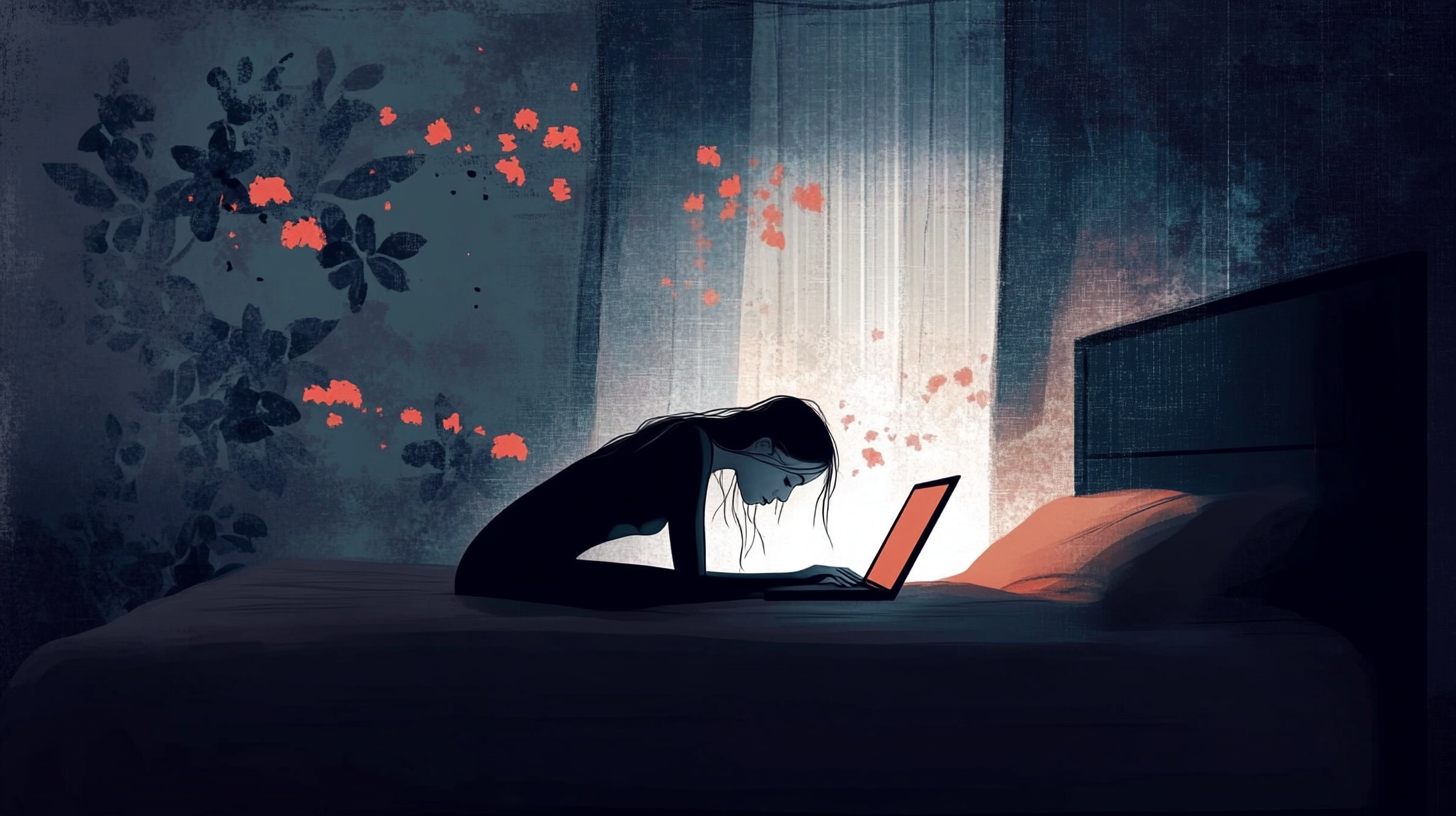


The Weight We Carry When No One Meets Us
“The mass of men lead lives of quiet desperation.” -Henry David Thoreau wrote
I have been circling this sentence since I was sixteen. I wrote essays about it in high school, carried it into my doctoral dissertation, and lived inside its meaning for most of my life. I thought I understood it — both through study and through experience. My life has been shaped by many forms of quiet desperation.
But I misunderstood the scope of the quote. I always assumed desperation came from scarcity, from negativity, from the absence of hope. I never imagined that desperation could also grow in the presence of abundance — in environments overflowing with positivity.
This past year forced me to confront that blind spot.
I found myself surrounded by people who believed positivity was the antidote to everything. They acknowledged difficulty only long enough to sprint away from it. Their fear wasn’t of suffering — it was of being “tainted” by negative emotion. And in that environment, I felt a familiar kind of emotional oppression, but from the opposite direction of the one I grew up with.
Growing up, the rule was simple: Pretend the bad things don’t exist. Now, the rule was: Acknowledge the bad things, but escape them immediately.
Both approaches erase the person who is still in the middle of their pain.
On the day this realization hit me, I was already emotionally raw. I tried to explain to a friend that sometimes the only way through suffering is to embrace the horror — to let it sit beside you long enough to teach you what it must. He disagreed, passionately. And while he wasn’t wrong that positivity has its place, it wasn’t the right moment for it. Not when I was still inside the experience.
From a clinical perspective, especially in trauma work, we know this: If the mind refuses to remember, the body will. And when the body remembers what the mind denies, we become dissociated — split from ourselves, unable to name the source of our own anguish.
So where does quiet desperation come from?
It comes from isolation. From being alone with our pain because we’re not ready to share it — or because when we are ready, there is no one willing to listen. It comes from a culture that either ignores suffering or tries to smother it with positivity. It comes from the pressure to appear fine, even when we’re drowning.
When we don’t talk about what hurts, we forget the contours of our own experience. We lose the colors of our emotions. We go numb. It looks like depression.
When we overindulge in our pain, we lose grounding in the opposite direction. It looks like mania — the Tasmanian‑devil chaos of emotion without containment.
Too much or too little of anything destabilizes us. Scarcity and abundance — both extremes — disrupt emotional regulation.
The antidote to quiet desperation is not positivity. It’s not denial. It’s not stoicism. It’s not drowning in our own stories.
It’s connection.
It’s the ability to share our burdens in ways that create the least harm and the most growth. It’s the willingness to sit with each other in the dark without trying to fix, erase, or outrun the truth. It’s the courage to witness suffering — our own and each other’s — without turning away.
When we can suffer together, or at least empathize with each other, the burden becomes lighter. And in that shared space, quiet desperation begins to dissolve.
Discover more from Themodel.Global
Subscribe to get the latest posts sent to your email.
