
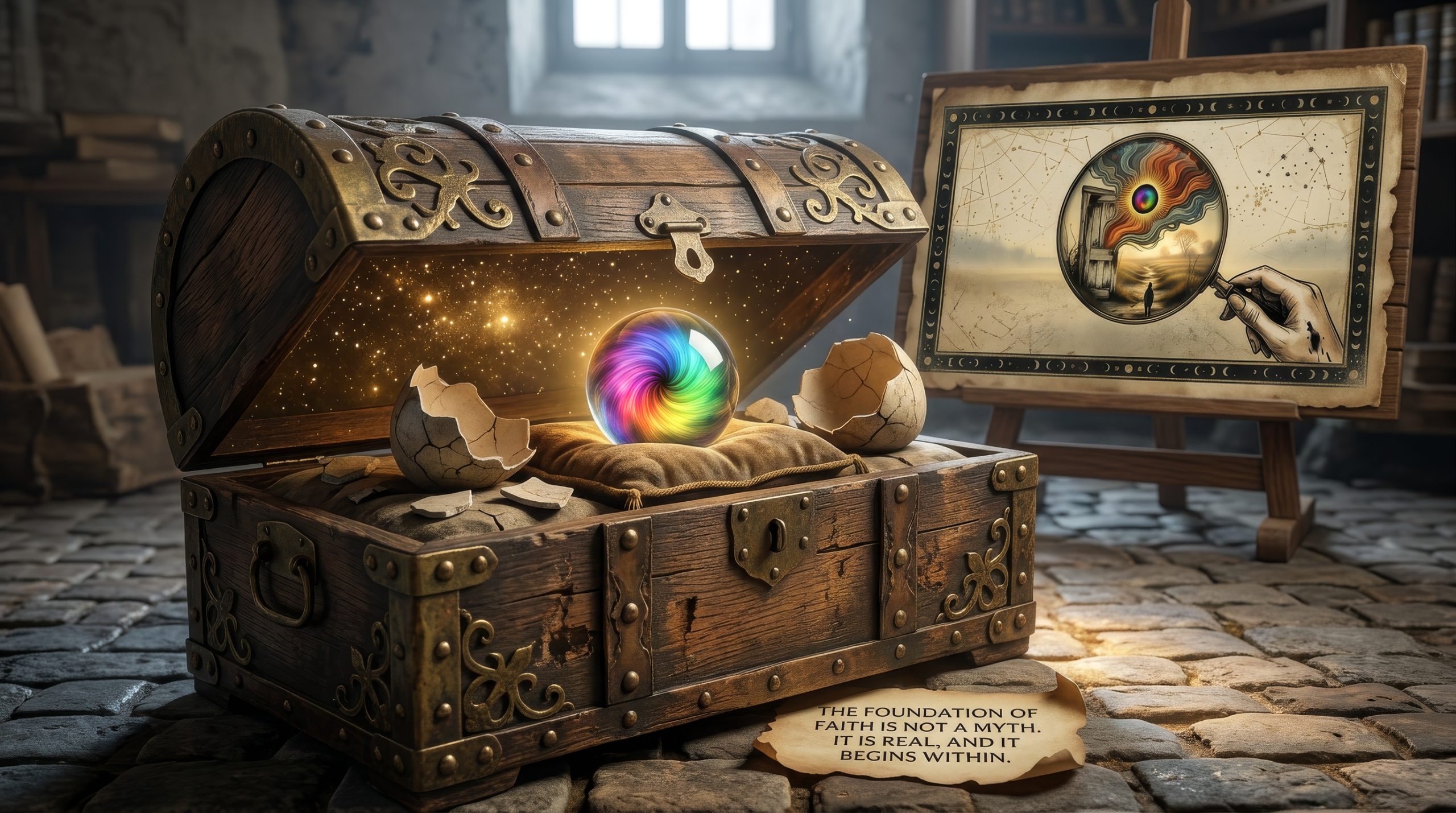


People are inherently kind.
I say this often, and I mean it literally. Babies aren’t born assholes. They arrive soft, open‑handed, unarmored — wired for connection, not cruelty. Their first instinct is to trust the world with their entire body.
This isn’t sentiment. It’s biology.
Human beings come into the world expecting safety. Our nervous systems are built to co‑regulate long before we can speak, defend, or understand anything about the world we’ve landed in. The infant melt — that full‑body yielding into the crook of a caregiver’s neck — is not a metaphor for trust. It is trust. It is the original blueprint.
And here’s the part most people forget:
That blueprint doesn’t disappear. It gets buried under fear, trauma, misattunement, and the armor we build to survive them — but the underlying architecture remains intact. The softness is still there. The capacity for yielding is still there. The impulse toward kindness is still there.
This is why I say trust is not a myth. Trust is what rises when the defenses fall away — when two people stop bracing long enough for their original biology to surface. It’s not an achievement. It’s not a skill. It’s not a moral virtue.
It’s a state the body remembers how to enter.
This is what happens when two nervous systems return to their baseline: softness, openness, mutual regulation. The field that emerges between them is not mystical. It’s measurable. It’s the same field that allows an infant’s brain to develop, a couple to settle, a community to feel safe.
The Dynamic Interpersonal Model begins here — with the premise that people are not born defended. We become defended. And what we call “healing” is often nothing more than the slow, courageous process of remembering the softness we started with.
The Biology of Softness: Why Trust Emerges When Defenses Fall
If we accept that people are inherently kind — that we begin soft, open, and wired for connection — then we also have to accept the corollary: everything that looks like unkindness is a defense. Not a character flaw. Not a moral failure. A defense.
The human nervous system has two primary modes:
- Defended
- Open
Every behavior we call “difficult,” “reactive,” “avoidant,” “controlling,” “cold,” or “cruel” is simply the defended state expressing itself. It is the body saying, “I do not feel safe enough to be soft.”
And every behavior we associate with kindness — generosity, patience, warmth, curiosity, attunement — emerges naturally when the system is open. Not because the person is “good,” but because the body is no longer bracing.
This is the foundation of the Dynamic Interpersonal Model:
People behave according to the state of their nervous system, not the content of their character.
When someone is defended, they cannot access the parts of themselves that are capable of trust, empathy, or connection. Not because they don’t want to — but because the biology of fear overrides the biology of softness.
When someone is open, those capacities return effortlessly. Softness is not learned. It is remembered.
This is a real, measurable phenomenon. When two people shift out of defense at the same time — even briefly — their nervous systems synchronize. Breath slows. Muscles release. The prefrontal cortex comes online. The relational field becomes warm, coherent, and expansive.
This is the same field that allows infants to grow. It is the same field that allows adults to heal. It is the same field that allows trust to rise without effort.
And this is why trust is not a myth. It is a biological state — one that emerges reliably when fear is absent.
Why Relational Fields Matter More Than Relational Narratives
Most people try to understand relationships by analyzing the story: what happened, who said what, who hurt whom, who failed to show up, who tried, who didn’t. Narratives are compelling because they feel concrete. They give us something to point to, something to argue about, something to defend.
But narratives are retrospective. They are interpretations of what the nervous system was doing — not the cause of it.
In the Dynamic Interpersonal Model, the story is never the primary data. The relational field is.
A relational field is the atmosphere created between two people in real time — the quality of safety, openness, tension, or fear that emerges when their nervous systems interact. It is the invisible climate that shapes behavior long before either person forms a conscious thought about what is happening.
Here’s the critical distinction:
- Narratives describe behavior.
- Fields generate behavior.
When the field is warm, open, and coherent, people become their most generous selves. They listen. They soften. They yield. They access curiosity, empathy, and patience without effort. This is not because they are “good people,” but because their biology is unthreatened.
When the field is tight, cold, or incoherent, people brace. They defend. They misinterpret. They withdraw or attack. They lose access to the parts of themselves that know how to connect. This is not because they are “bad people,” but because their biology is afraid.
This is why relational fields matter more than relational narratives:
The field determines what is possible. The narrative only explains what already happened.
Two people can have a beautiful story and a terrible field. Two people can have a chaotic story and a profoundly safe field. Two people can have years of misfires — and still, beneath all of it, a field that opens the moment they stop defending.
The field is not created by effort, insight, or intention. It emerges when both people return to the softness they were born with.
And this is why trust is not a myth. Trust is not built through narrative repair. Trust rises when the field becomes safe enough for the body to unclench.
When you understand this, everything changes:
- You stop pathologizing people for their defenses.
- You stop blaming yourself for relational patterns you couldn’t override.
- You stop trying to fix the story and start attending to the field.
- You begin to see that kindness is not a moral achievement — it is a physiological state.
The relational field is the real data. The narrative is just the artifact.
Why the Therapeutic Alliance Works: The Relational Field as the Mechanism of Change
In psychotherapy, we talk endlessly about the therapeutic alliance — the bond, the trust, the collaborative relationship between therapist and client. Entire bodies of research have shown that the alliance predicts outcomes more reliably than any specific modality, intervention, or theoretical orientation.
But we rarely name why the alliance works.
It works because of the relational field.
When a therapist sits with a client in genuine openness — regulated, attuned, unguarded, and non‑defensive — the client’s nervous system begins to shift. Not because of the therapist’s words, but because of the atmosphere created between them.
This is the same field described here: the warmth that expands when two people stop bracing and let themselves be real.
In therapy, this field becomes the primary mechanism of change.
Here’s why:
1. The client’s nervous system borrows the therapist’s regulation
Before insight, before interpretation, before narrative coherence — the client’s body senses safety. Muscles soften. Breath deepens. The prefrontal cortex re-engages. The defended state loosens its grip.
This is not metaphor. It is co‑regulation.
2. The field allows the client to access parts of themselves that were previously offline
When the field is safe, the client can feel things they couldn’t feel alone. They can think thoughts that were too threatening. They can remember without collapsing. They can imagine without fear.
The therapist doesn’t “give” them these capacities. The field restores them.
3. The alliance is not built through narrative repair — it is built through nervous system synchrony
Clients often say, “I don’t know why, but I feel calmer with you,” or “I can think more clearly here,” or “I feel like I can breathe.”
These are field effects, not cognitive ones.
The story may shift later, but the field shifts first.
4. The therapist’s job is not to fix the narrative — it is to maintain the field
A therapist who is regulated, attuned, and unafraid creates a space where the client’s defenses can relax. A therapist who is anxious, rigid, or defended creates a field where the client must brace.
This is why the therapist’s internal state matters more than their technique.
5. Change happens when the client experiences themselves differently inside the field
Not because the therapist “explains” something. Not because the client “understands” something.
But because the client’s body learns, through direct experience:
- I can be soft and still be safe.
- I can be seen and not be harmed.
- I can yield without disappearing.
- I can trust without collapsing.
This is the same biological truth: trust is what rises when nothing inside you is defending.
The therapeutic alliance is simply the professionalized version of that field — a structured, intentional space where one person’s openness allows another person’s softness to return.
This is why relational fields matter more than relational narratives. This is why people are inherently kind. This is why trust is not a myth.
And this is why therapy works.
Closing
In the end, everything in this model comes back to one simple truth: we are born soft.
Not naïve.
Not fragile.
Soft — in the way living things are soft when they trust the world enough to grow.
The work of healing, of relationship, of therapy, is not about becoming someone new. It is about returning to the person we were before fear taught us to brace. It is about remembering the field we once created effortlessly — the one that rises whenever two people feel safe enough to stop defending.
If people are inherently kind, and I believe they are, then every act of cruelty is a story about fear. And every moment of connection is a story about what becomes possible when fear loosens its grip.
Trust is not a myth.
Kindness is not an exception.
Softness is not a weakness.
These are the conditions under which human beings come alive.
The Dynamic Interpersonal Model is simply a way of seeing this clearly — of recognizing that beneath every defense is a nervous system longing to return to openness, and beneath every relationship is a field waiting to be felt.
When we attend to that field, everything changes. When we ignore it, nothing does.
And so the work — in therapy, in partnership, in community, in ourselves — is the same:
Create the conditions where softness can return. Let the field rise. Let people be who they were before they learned to brace.
Because people are inherently kind. And trust, when given the smallest chance, always finds its way back.
Discover more from Themodel.Global
Subscribe to get the latest posts sent to your email.
